
Alberta puts a windshield through a lot. Searing summer sun, hard winter cold, sudden swings between the two, and some of the heaviest hail in the country all stress the glass, each in its own way. A windshield in good shape takes most of it in stride, but a small chip is the weak point that every kind of weather goes looking for. Here is how heat, cold, sudden temperature changes and hail affect your auto glass, and the practical steps that protect it through an Alberta year.
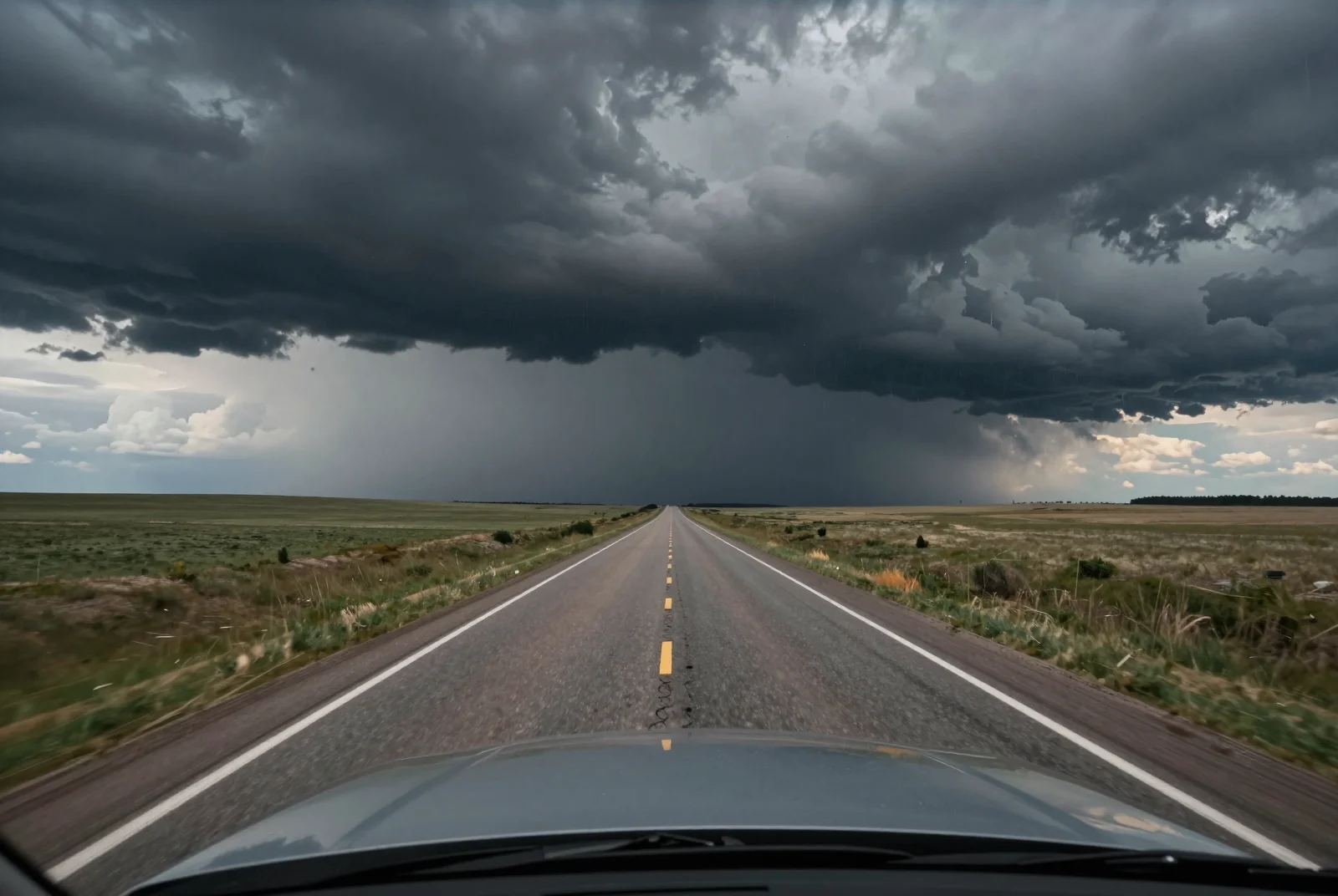
Heat and sun
On a hot day the sun heats the glass and expands it, and an existing chip is at its most likely to start spreading. The bigger risk in summer is a sudden cold shock on hot glass: cold water poured on a baking windshield, or air conditioning aimed straight at it on full, can crack the glass through the temperature difference. Parking in shade, using a sunshade, and letting the cabin cool gradually all reduce that stress. The windshield itself is laminated and blocks most of the sun’s ultraviolet light, which protects your interior, but heat working on a chip is the thing to watch.
Cold and the deep freeze
Cold works the other way. Deep cold stiffens and contracts the glass, and any moisture sitting in a chip freezes and expands, prying the chip open into a running crack, which is why Alberta’s first hard freezes are when so many chips finally give way. The matching danger to summer’s cold-on-hot is heat-on-cold: hot air or hot water on a frozen windshield can crack it just as fast. Warm the glass gradually with the defroster building from low, the same unhurried approach we set out in our winter windshield care. Hot water on frozen glass is one of the quickest ways to crack a windshield.
The real enemy: sudden temperature swings
Glass copes well with steady temperatures, hot or cold. What cracks it is the rapid swing, and that is true twice over when a chip is already there. A hot windshield met by cold rain or a cold car wash, a frozen one hit with the heater on full, cold glass and a splash of hot water, in each case different parts of the glass expand or contract at different rates, and the stress concentrates at the weakest point, which is usually an existing chip. The single best defence is to avoid sudden swings: change the temperature of the glass gradually and never bridge a big gap in one go.
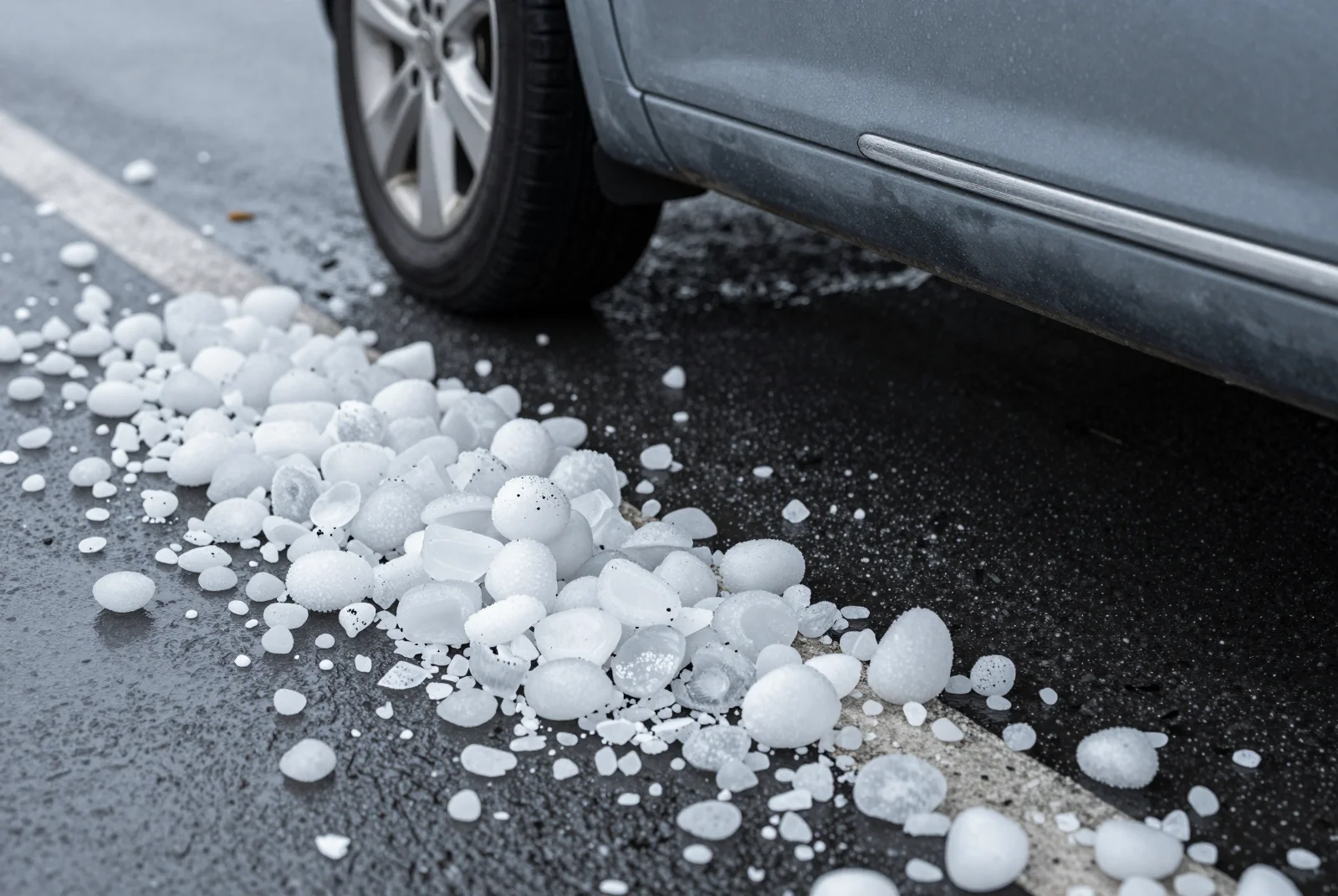
Hail, an Alberta specialty
Central and southern Alberta sit in one of the most hail-prone regions in Canada, and hail is hard on glass. It chips and cracks windshields and can shatter side and rear windows outright. A laminated windshield may crack under a heavy strike but tends to hold together rather than fall in, which is part of how it is built. After a hailstorm, do not drive if the glass is shattered or your view is obstructed, document the damage with photos for your insurer, and have the glass assessed for repair or replacement. Comprehensive coverage often covers hail damage, so it is worth checking your policy. When a storm is forecast, parking under cover or using a hail blanket is the simplest protection.
Wind, storms and flying debris
High winds and highway driving fling gravel and grit, and a stone off the road or thrown up behind a truck is the classic cause of a fresh chip. Keeping your distance behind trucks and gravel haulers genuinely reduces the risk. The reason it matters here is the chain reaction: a chip from summer debris is exactly the damage that then spreads in the next heatwave or cold snap, so catching it early is what stops the weather from finishing the job, as we cover in repairing chips before the first frost. A chip caught early stays a chip.
How to protect your auto glass
The habits that protect a windshield through Alberta’s extremes are simple and they overlap:
Fix chips promptly. A chip is the weak point heat, cold and thermal shock all exploit, so repairing it early removes the target.
Avoid thermal shock. No hot water on frozen glass, no cold water on hot glass, and no full blast of heat or cold straight onto the windshield. Change its temperature gradually.
Park smart. Shade and a sunshade in summer, a cover or covered parking in winter and before forecast hail.
Get hail damage checked. Have the glass assessed after a storm, and keep your comprehensive coverage in mind.
FAQs
Ready to get help with your glass issue?
Weather left a chip, crack or hail damage on your glass? Request a free quote for an assessment. The team handles auto glass repair and replacement across Alberta, hail season included. Call 310-GLAS (4527), text 780-652-1296, or book online.