
Highway hum through the bedroom wall at night, a client meeting held over the rumble of traffic, a restaurant where guests have to lean in to talk. Noise is one of the harder things to design out of a building, and the weak point is almost always the windows. Curtains, foam panels and white-noise machines treat the symptom. Acoustic glass treats the opening the sound actually comes through. Here is how it works, how its performance is measured, and what a switch to it realistically changes.

Why windows are the weak point for noise
Sound is vibration moving through air and solid material. When it reaches a window, the glass flexes and re-radiates that energy into the room. A single pane has little mass to resist it, and a standard double-pane unit, built mainly for heat, is not far behind. The hardest noise to stop is low-frequency: the diesel rumble, the passing train, the bass from construction equipment. Those long sound waves carry a lot of energy and pass through ordinary glass and framing while higher-pitched sounds like sirens and voices are easier to knock down.
How acoustic glass works
Acoustic glass is a laminated product, and it leans on three things working together rather than one trick:
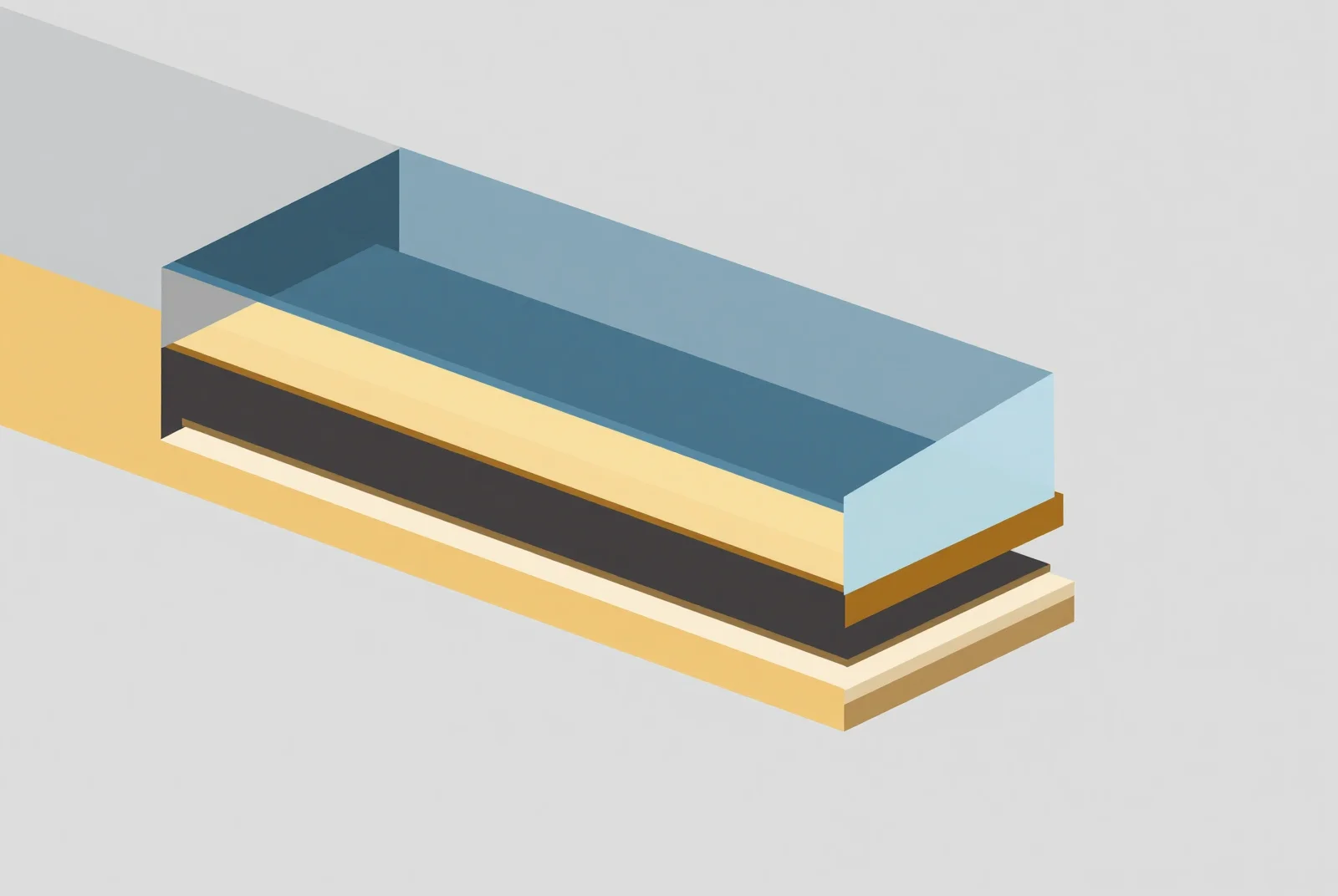
A damping interlayer. Two glass sheets are bonded around a layer of polyvinyl butyral (PVB). Acoustic-grade PVB is tuned to flex and absorb vibration, so it bleeds off sound energy instead of passing it to the inner pane. The same interlayer is what holds a windshield together, which is why it adds security as well.
Asymmetric pane thicknesses. In a basic double-pane unit the two panes are the same thickness, so they resonate at the same frequency and let that frequency through. Pairing a thicker pane with a thinner one means the two stop different frequencies, which closes that gap.
Mass and air space. More glass mass and a wider gap between panes both reduce transfer. It is worth being straight about one point the brochures blur: argon and krypton gas fills do far more for heat than for sound, so the acoustic gain comes from the lamination, the pane thicknesses and the gap, not the gas.
How the performance is measured: STC
Glass noise control is rated by its Sound Transmission Class, or STC, measured under the ASTM E90 and E413 test methods. A higher number blocks more airborne sound, and a useful rule of thumb is that every increase of about 10 points sounds roughly half as loud. A single pane sits around STC 26 to 28, a standard double-pane unit around 28 to 34, and an acoustic laminated unit commonly reaches the low 40s, higher with thicker laminates and a wider gap. No window makes a room silent, but moving from a standard double-pane to an acoustic unit is a change most people hear right away, turning a steady roar into a background murmur.
Standard double-pane vs acoustic laminated glass
Feature
Main purpose
Build
Low-frequency noise
Typical STC
When it breaks
UV control
Standard double-pane
Thermal insulation and weather sealing
Two panes of similar thickness, air or gas gap
Limited reduction
About 28 to 34
Shatters
Minimal unless coated
Acoustic laminated glass
Noise reduction, with added security and UV control
Laminated pane with a sound-damping PVB interlayer, often asymmetric thicknesses
Noticeably better
About 38 to 45 or higher
Holds together on the interlayer
Blocks most ultraviolet light, around 99 per cent
What it changes, at home and at work
At home, the difference shows up first at night, when traffic and early-morning trucks stop pulling you out of deep sleep, and in a home office, where calls are not interrupted by a neighbour’s mower. The laminated build resists break-ins and severe weather because the glass holds together rather than falling out of the frame, and the same interlayer blocks most ultraviolet light, which slows the fading of floors and furniture. For these upgrades the relevant service is residential windows.
In a workplace, acoustic glass earns its place two ways. On exterior windows it keeps street noise out of offices and dining rooms. As interior partitions it gives speech privacy for clinics, law offices and boardrooms while still letting daylight through, which is where it overlaps with commercial glass partition work. Quieter rooms are easier to concentrate and hold a confidential conversation in, and on a busy street they protect the atmosphere a business is trying to keep.
Why installation decides the result
Even the best acoustic unit fails if it is fitted poorly, because sound behaves like water and finds the path of least resistance. Gaps around the frame, worn weather stripping or thin caulking let noise leak around the glass entirely, which acousticians call flanking. A proper install seals the frame and the rough opening so vibration cannot bypass the glass through the jamb or the wall. That sealing detail is most of the reason soundproofing is not a do-it-yourself job, and why two identical windows can perform very differently.
FAQs
Ready to get help with your glass issue?
Tired of the noise getting in? Book an assessment and request a free quote, and the team will measure the problem and recommend the glass thickness, configuration and seal to match it. Call 310-GLAS (4527), text 780-652-1296, or request a free quote online.