
Commercial, residential, and auto glass support
Quote requests available online
Call or text for service guidance
Location-based routing for the right shop
The glass is in, it looks finished, and you are keen to get going. The one thing between you and the road is the adhesive holding your new windshield to the body. The time it needs to set is the safe drive-away time, and it is the step that most often gets rushed. Drive too soon and you undo the part of the job that matters most in a crash.

What safe drive-away time actually is
A windshield is bonded to the body with a moisture-curing polyurethane adhesive along the pinch weld. That bond is structural. It holds the glass in place during a collision and gives the passenger airbag a firm surface to deploy against. Safe drive-away time is the minimum the urethane needs to cure to the strength that can carry those crash loads. It is set by the adhesive manufacturer, not by how dry the bead feels to the touch, and a careful technician follows that published figure rather than a guess.
How long it usually takes
The install itself runs about 60 to 90 minutes. After that, a high-modulus fast-cure urethane often reaches its safe drive-away point in around 30 to 60 minutes in mild conditions. Some adhesives and some vehicles need longer. Many products also publish a longer time for vehicles with dual front airbags than for single-airbag vehicles, because the bond has more load to carry. The technician will give you the exact time for your vehicle and the adhesive used before you leave.
Why cold weather changes the wait
Moisture-curing urethane reacts with humidity in the air and cures from the outside of the bead inward. Cold, dry Prairie air slows that reaction down. A bay kept warm helps, and shops switch to cold-weather urethane through the winter, but a replacement done at minus 20 still tends to need a longer wait than the same job in July. If you are booking in the depth of winter, plan for extra time rather than a tight turnaround, and expect a mobile install in the cold to take cure time into account.
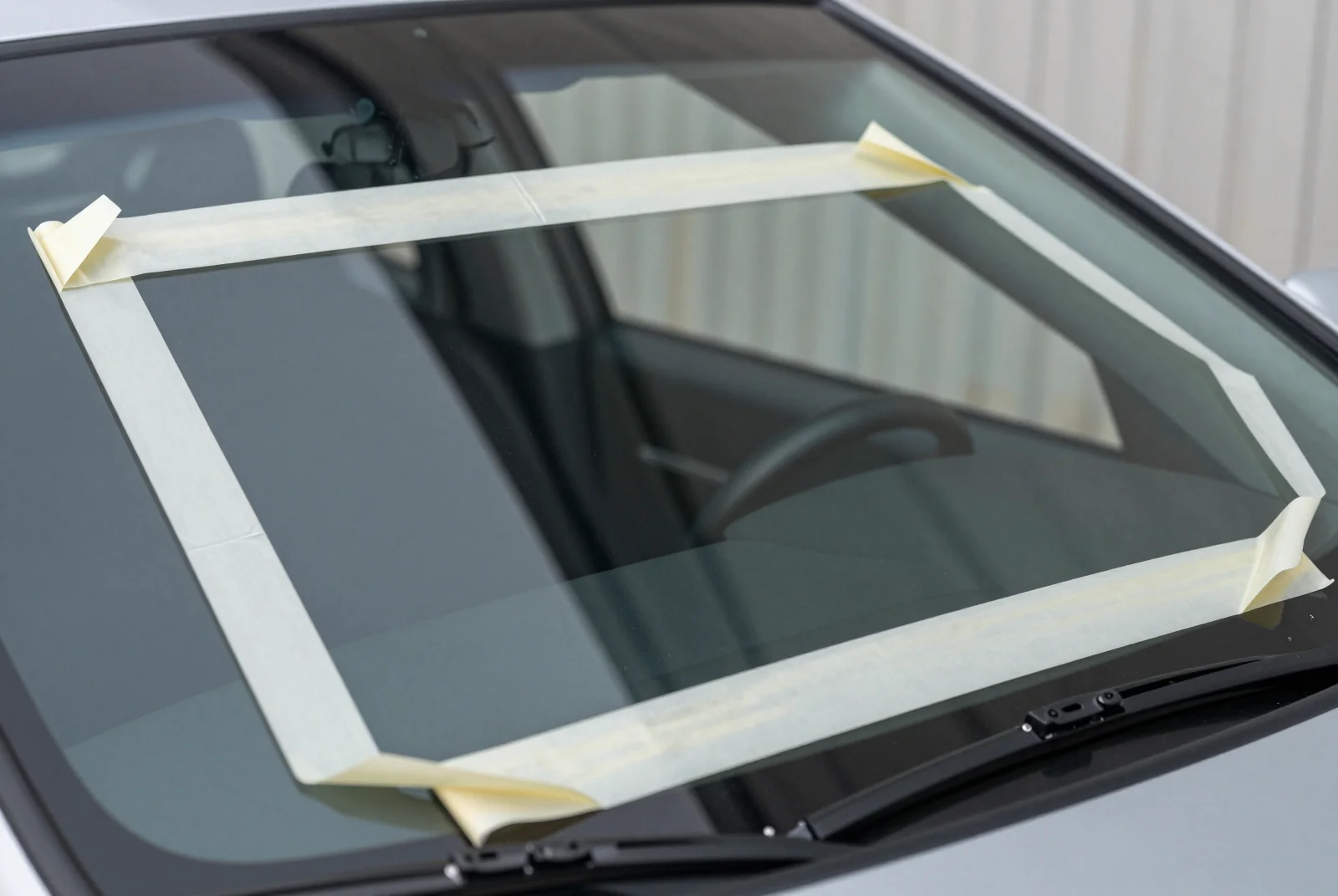
What to do, and not do, right after
Wait the full safe drive-away time the technician gives you before driving.
Leave a side window down a small crack for the first day so cabin pressure does not push on the fresh seal.
Keep the retention tape on for as long as the shop advises, usually about a day, even if it looks untidy.
Hold off on car washes and pressure washing for a day or two, since high-pressure water can work into a curing seal.
Avoid slamming doors, which spikes cabin pressure against the new bond, and do not pull at the moulding.
Why the wait is worth it
A windshield that is not yet bonded can shift out of position, leak later, or fail to do its job in a crash. The same glass that helps support the roof in a rollover and backs the passenger airbag only works if the urethane has cured enough to hold it. An hour in the waiting room or a careful first day is a small price for that. If a shop hands the keys back the moment the glass is set, with no mention of a drive-away time, that is a reason to ask questions. The full replacement process should always end with a clear cure time, and on a camera-equipped vehicle, with recalibration as well.
FAQs
Often about 30 to 60 minutes with a fast-cure adhesive in mild weather, but some vehicles and colder conditions need longer. The technician confirms the exact safe drive-away time for your vehicle before you leave.
The urethane may not have cured enough to hold the glass firmly. Driving early can shift the windshield, lead to leaks, or weaken the bond that the glass relies on in a crash. The short wait is far cheaper than the risk.
A sealed cabin builds pressure when you close doors or drive. A small gap lets that pressure escape rather than pushing outward against the fresh adhesive while it sets.
Wait a day or two before a car wash or pressure wash. High-pressure water aimed at a curing seal can force its way in before the bond is fully set.
Usually, yes. Moisture-curing urethane sets more slowly in cold, dry air, so a winter replacement on the Prairies often needs a longer wait than the same job in summer.
Ready to get help with your glass issue?
Booking a windshield replacement? Request a free quote, and the team will walk you through the safe drive-away time for your vehicle and adhesive before any work starts. Call 310-GLAS (4527) or request a free quote online.